Work in Progress
Beliefs Shift, Behavior Does Not: AI Adoption Among Micro-Entrepreneurs
with Juan Pedro Ronconi [JMP] (Manuscript's Target: Management Science)
with Juan Pedro Ronconi [JMP] (Manuscript's Target: Management Science)
Presented at: BERD 2026 (KU Leuven)
Platform Certification as a Substitute for Reputation: Evidence from Mandatory AI Disclosure.
with Michael Mödl (Under review at the Strategic Entrepreneurship Journal)
with Michael Mödl (Under review at the Strategic Entrepreneurship Journal)
Presented at: DRUID26 (Copenhagen)†; AoM 2025 (Copenhagen); BERD 2025 (U. Namur)
Technology Licensing and Outward Inventor Mobility: The Role of Relational Contracting.
with Bart Leten, Stijn Kelchtermans, & Eduardo Melero (Manuscript's Target: Strategic Management Journal)
with Bart Leten, Stijn Kelchtermans, & Eduardo Melero (Manuscript's Target: Strategic Management Journal)
Presented at: SMS 2026 (Berlin)†; DRUID26 (Copenhagen)†; EPIP 2025 (U. Antwerp); Data and Algorithms for ST&I Studies (KU Leuven)
🏅 Nominated for the SMS Annual Conference PhD Paper Prize (2026)
How Should Mentors Reduce Uncertainty? Theory and Evidence from Job-Seeker Training in France.
with Thomas Åstebro, Bruno Crépon, Mona Mensmann, Andrew Funck, & Mathis Schulte (Pilot Stage)
with Thomas Åstebro, Bruno Crépon, Mona Mensmann, Andrew Funck, & Mathis Schulte (Pilot Stage)
Presented at: AI Plus Management Consortium 2026 (UCL Management); CFXS 2025 (San Francisco)
Shadow AI and Knowledge Governance in Firms
with Pablo Paniagua (Manuscript's Target: Management Science)
with Pablo Paniagua (Manuscript's Target: Management Science)
Can AI Replace Mentors? Evidence from Entrepreneurship Training in LATAM Schools.
with Igor Asanov, Thomas Åstebro, Emma Brunskill, Guido Buenstorf, Mona Mensmann, Lelys Dinarte-Diaz, & Adam Hardaker (Research Design Stage) [Grant Under Review: Volkswagen Stiftung, Change! Fellowship]
with Igor Asanov, Thomas Åstebro, Emma Brunskill, Guido Buenstorf, Mona Mensmann, Lelys Dinarte-Diaz, & Adam Hardaker (Research Design Stage) [Grant Under Review: Volkswagen Stiftung, Change! Fellowship]
Do Network Spillovers Influence Digital Tool Adoption in Startups? Evidence from Germany
with Hanna Hottenrott & Maikel Pellens (Idea Stage)
with Hanna Hottenrott & Maikel Pellens (Idea Stage)
Pre-PhD Work
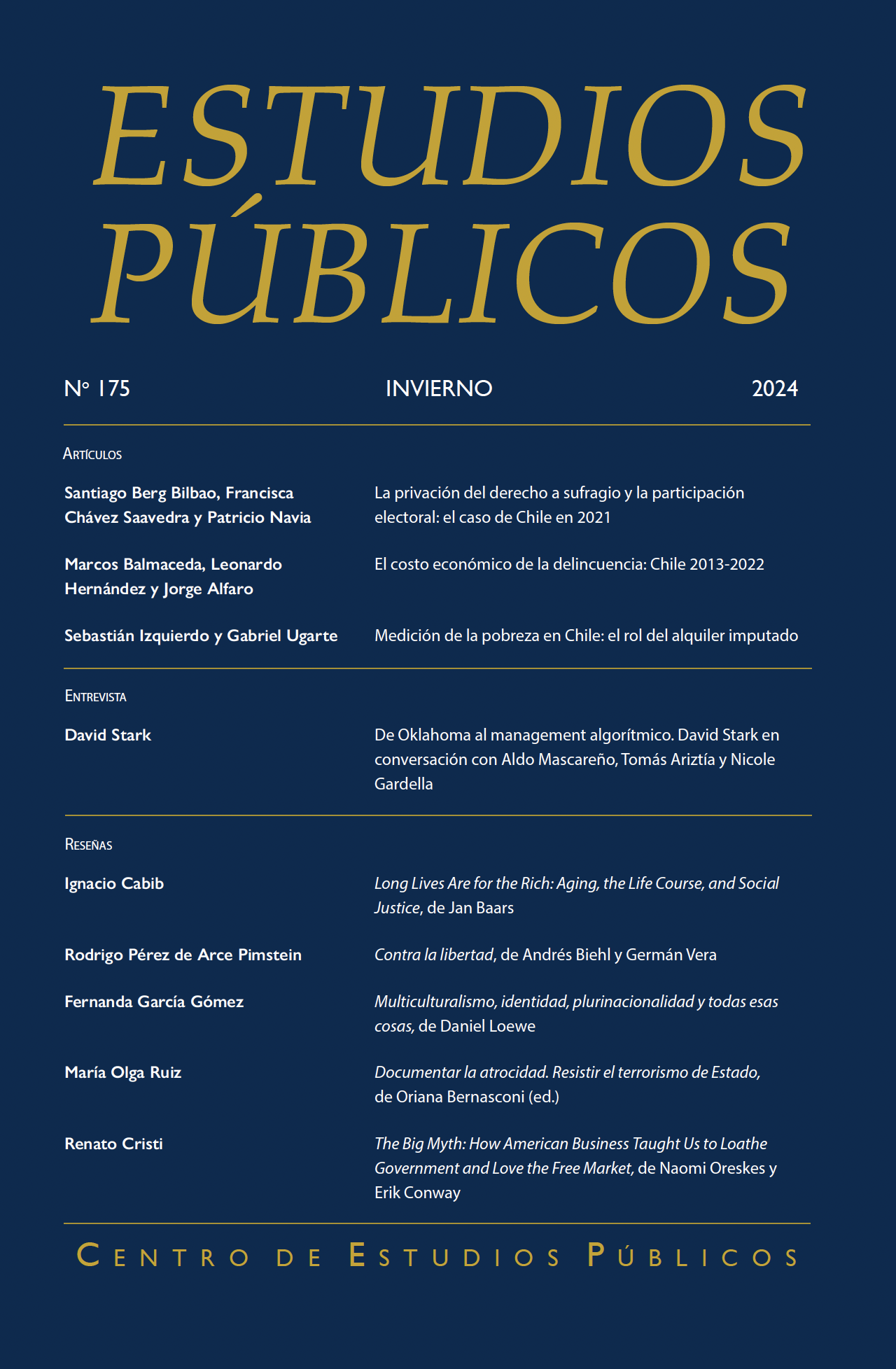
El Costo Económico de la Delincuencia: Chile 2013-2022
with Leonardo Hernández & Jorge Alfaro (Published in Estudios Públicos, 2024)
with Leonardo Hernández & Jorge Alfaro (Published in Estudios Públicos, 2024)
Presented at: Chilean Public Policy Society 2023 (Santiago)
† Accepted; presentation scheduled